
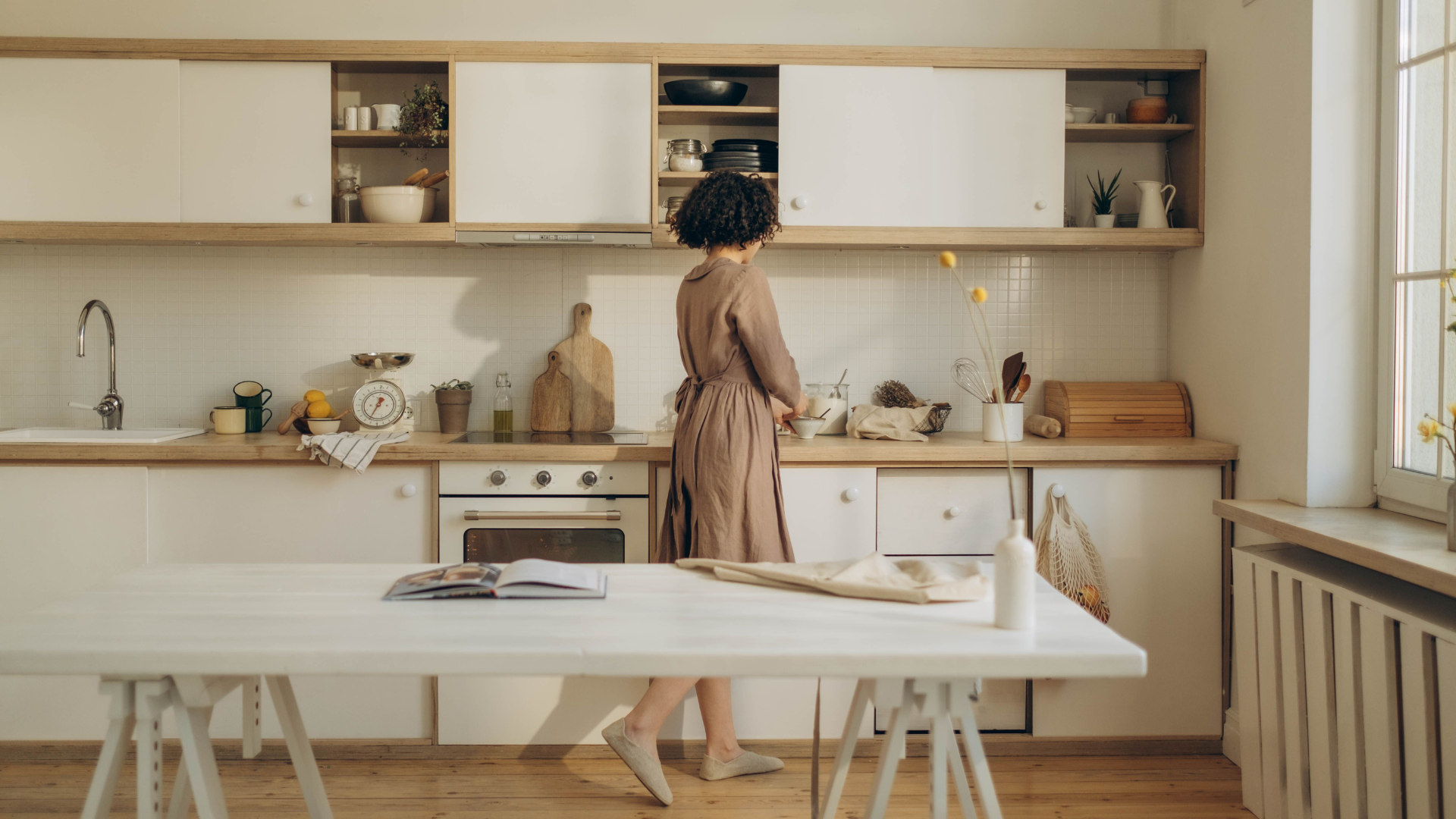
Registration is now open for my free live class, Prep 9 Family Dinners in 30 Minutes
I’ll show you how to turn one short prep session into 9 family dinners…that’s 36 individual portions…so you can spend less time in the kitchen and make busy evenings feel easier.
If you want to save time in the kitchen, the biggest mistake is trying to make every night’s dinner faster while still starting from zero every night.
You search for 20-minute recipes. You choose meals with fewer ingredients. You try to chop a little faster, cook a little quicker and get everything onto the table with less fuss.
And yet, dinner still seems to take over the evening.
That is because cooking is only one part of the work. Every night, you are also deciding what to make, checking what you have, gathering ingredients, preparing them and cleaning everything up afterwards.
The real way to save time is not to become faster at repeating all of that. It is to reduce how often you have to start again.
The short answer: You do not need to get faster at making dinner. You need a simple system that lets one short prep session do the work for several family meals.
Why do quick dinner recipes not save as much time as you expect?
Quick recipes can be useful, but they usually solve only the cooking part of dinner.
A recipe might promise to be ready in 20 minutes, but that time often does not include:
- deciding what your family will eat;
- checking the fridge, freezer and cupboards;
- finding or buying the ingredients;
- washing, chopping, measuring and seasoning;
- clearing the counters and washing up; and
- doing it all again the following evening.
When you are already carrying the mental load of work, children, appointments and a hundred other things, those repeated tasks are often the part that feels hardest.
So if quick recipes have not made your evenings feel much easier, it is not because you are disorganised or too slow. You have simply been trying to save minutes from one meal instead of removing repeated work from the whole week.
The biggest mistake when trying to save time in the kitchen
The biggest mistake is treating every dinner as a separate job.
You choose Monday’s meal, prepare Monday’s ingredients, cook it and clean up. On Tuesday, the entire process begins again with a completely different meal.
This creates what I call the start-from-scratch cycle:
- Decide.
- Gather.
- Prepare.
- Cook.
- Clean up.
- Repeat tomorrow.
Even when the recipe itself is quick, the cycle is exhausting because it asks you to make new decisions and repeat the same types of preparation every day.
To save time in the kitchen, focus on reducing the number of times you repeat those tasks…not simply reducing the number of minutes a recipe spends in the oven.
What should busy mums do instead?
Prepare one entire recipe or flexible main component in a larger quantity, divide it into family-sized portions and use those portions to create different dinners.
This is the shift from one dinner at a time to one prep, multiple dinners. It’s a simple way to save time in the kitchen without cooking every meal in advance.
You are not necessarily cooking every meal in advance. You are completing the most repetitive part once so that you have a head start on several evenings.
That means fewer ingredients to handle, fewer chopping boards to wash, fewer decisions to make and far less chance of reaching 5 p.m. with no idea what to serve.
What does “one prep, multiple dinners” look like?
Imagine preparing a larger batch of chicken shawarma. Instead of making enough for only tonight, you divide the seasoned chicken into three family-sized portions.
One portion becomes tonight’s dinner. The other two are kept for future meals. Because the main component is already prepared, each portion can be finished differently:
- Chicken shawarma wraps with lettuce, cucumber, tomatoes and yoghurt or garlic sauce;
- Shawarma couscous bowls with roasted vegetables and a squeeze of lemon; or
- Shawarma pita pockets with pickled onions and cucumber-yoghurt sauce.
The dinners do not have to look or feel the same. What they share is the work you have already completed.
This is an important distinction. The goal is not to eat the same meal three nights in a row. The goal is to prepare once and give yourself several easier starting points.
How can one prep session create several family dinners?
Use this simple three-part approach:
1. Choose one flexible base
Start with a main component that can work in more than one meal, such as seasoned chicken, mince, a sauce or a family-friendly filling.
You do not need a complicated plan. You just need something versatile enough to be served in a few different ways.
2. Prepare more than one meal’s worth
Handle the repetitive work once. Measure, chop, mix or season a larger quantity, then divide it into portions that suit your family.
This is where the time saving happens: you are not pulling out the same ingredients and equipment again later in the week.
3. Change the finishing touches
Use different sides, vegetables, wraps, grains or toppings so that each dinner feels fresh.
One prepared base can become a traybake, a bowl, a wrap or another easy family meal. The hard part is already done, while the final meal still has variety.
Is this the same as spending all Sunday meal prepping?
No. Saving time in the kitchen does not have to mean losing half your weekend to a huge cooking session or filling the fridge with rows of identical containers.
The purpose of a good prep system is to make life lighter, not give you another project to manage.
A short, focused prep can be enough when every action is chosen because it will help with more than one dinner. You are looking for useful overlap, not trying to complete an entire week’s cooking in one go.
Why is this more effective than simply cooking faster?
Cooking faster may save a few minutes tonight. Reducing repeated work can save time and mental energy across several nights.
When part of dinner is already prepared:
- you have fewer decisions to make at the busiest time of day;
- you are less likely to fall back on an expensive or stressful last-minute option;
- you can get a family dinner underway even when the day has not gone to plan;
- you spend less time handling the same ingredients and washing the same equipment; and
- dinner becomes easier to adapt because you already have a flexible starting point.
The biggest benefit is not just efficiency. It is opening the fridge or freezer and knowing you have already helped your future self.
What if meal planning has never worked for you?
You do not need a colour-coded spreadsheet, a perfect weekly routine or a family that happily eats everything you serve.
Traditional meal planning often tells you what you will cook each night but still leaves you to do all the work each night. A prep-ahead system goes one step further: it turns the plan into something practical that is ready to help you.
Start small. Choose one flexible component and prepare enough for more than one dinner. Notice which repeated task disappears later in the week. That is the kind of time saving that makes a real difference.
Ready to stop starting dinner from scratch every night?
This “one prep, multiple dinners” shift is one of the three pillars I teach inside my free webinar, Prep 9 Family Dinners in 30 Minutes.
I will show you how one short prep session can create nine family dinners…that is 36 individual portions…without spending your whole Sunday in the kitchen.
You will learn the complete system I use to make family dinners easier, reduce the daily mental load and have food ready to support busy evenings.
Registration is open now.
Frequently asked questions about saving time in the kitchen
What is the best way for busy mums to save time in the kitchen?
The best place to start is by reducing repeated work. Prepare one flexible component in a larger quantity and use it across several different family dinners instead of starting every meal from scratch.
Do I have to eat the same dinner several times?
No. Use different sides, vegetables, grains, wraps, sauces or toppings so that one prepared component becomes several distinct meals.
Do I need a large freezer to make this work?
No. You can begin with just two or three meal-sized portions and use the space you already have. Also, my preferred freezing container is a freezer bag. They take up little space and many can fit inside a small space.
How do I stop relying on last-minute dinners?
Give your future self a prepared starting point. When the main component of a meal is ready, choosing and finishing dinner requires less time and mental energy.
Where can I learn the complete dinner prep system?
Register for the free Prep 9 Family Dinners in 30 Minutes live class. I teach the three pillars that help busy mums prepare family dinners quickly and make weeknights easier.
Love,
Nakita xxx


Leave a Comment